Carry Yourself Like You Matter
Why Self-Respect Shows Up in the Way You Live, Speak, and Treat Others
By Mary R. Dittman, M.B.A.
Years ago, I wrote a two-part series called “Be a Lady.”
At the time, I focused quite a bit on manners, appearance, and elegance.
I still care about those things.
But today, I think the deeper issue is self-respect.
How do you carry yourself when no one is watching?
How do you care for your body, your home, your belongings, your work, and your relationships?
How do you speak when you’re angry?
How do you treat people when you have the power to embarrass them?
How do you behave when someone else behaves badly?
Those questions say far more about confidence than whether your outfit is perfect.
Take Care of Yourself Because You Matter
I believe taking care of yourself is an act of self-respect.
That does not mean looking polished every minute.
It does not mean wearing makeup to the grocery store.
It does not mean having an expensive wardrobe or looking like a celebrity.
It means paying attention.
Are you caring for your health?
Are you getting enough sleep?
Are you wearing clothes that fit and make you feel good?
Are you taking care of your teeth, hair, skin, and body?
Are you moving your body?
Are you eating in a way that supports your health?
Not because you have to earn anyone’s approval.
Not because you need to become more attractive to a man.
Because you live in this body.
And you are worth caring for.
I’ve noticed that when I take a little extra care with myself, I often feel more motivated and more confident.
Even something as simple as putting on workout clothes I actually like can make exercise feel more enjoyable.
That may sound superficial, but I don’t think it is.
The point is not vanity.
The point is:
Treat yourself like someone worth taking care of.
Your Environment Affects You
Self-respect also shows up in the spaces around us.
Years ago, I looked down at an old wallet I was carrying. It was worn out, overstuffed, and held together more by hope than by structure.
And I remember thinking:
Why am I carrying something that makes me feel sloppy every time I open my purse?
I didn’t need a designer replacement.
I just needed something clean, functional, and in good repair.
That small realization made me look at other areas of my life.
My handbag.
My car.
My closets.
My drawers.
My office.
Was I surrounded by things I didn’t use, didn’t like, or had simply stopped noticing?
At one point, I completely reorganized my university office because I wanted a new space.
There wasn’t another office available.
So I changed the one I had.
I cleaned out drawers and file cabinets.
I eliminated clutter.
I created a new color scheme.
And suddenly the same office felt completely different.
That experience reminded me that we don’t always need a new life.
Sometimes we need to care better for the life we already have.
Personal Standards Matter
Standards are not just about dating.
They apply to your own behavior too.
What kind of employee are you?
What kind of friend are you?
What kind of neighbor?
What kind of daughter, sister, coworker, leader, or church member?
Do you show up when you say you will?
Do you take care of your responsibilities?
Do you return things you borrow?
Do you keep your word?
Do you apologize when you’re wrong?
Do you leave people and places better than you found them?
Confidence is not simply saying, “I know my worth.”
It is living in a way that reflects it.
That means holding yourself to standards—not perfection, but integrity.
You Don’t Have to Put Someone Else Down
This may be one of the most important forms of self-respect.
A confident woman does not need to humiliate another person in order to feel powerful.
That can be difficult when we feel hurt.
Social media has made public retaliation incredibly easy.
Someone disappoints us, and within minutes we can post something vague but obvious.
Someone insults us, and we can screenshot the conversation.
Someone makes us angry, and suddenly we have an audience for our side of the story.
It can feel satisfying in the moment.
But I have rarely seen public humiliation create peace.
There is a difference between addressing harmful behavior and trying to destroy someone.
You can tell the truth.
You can defend yourself.
You can set a boundary.
You can end a relationship.
You can report behavior that genuinely needs to be reported.
And still refuse to make cruelty your strategy.
Take the High Road—Without Becoming a Doormat
“Take the high road” sometimes gets interpreted as:
Smile.
Say nothing.
Let people mistreat you.
Pretend you aren’t angry.
That is not what I mean.
Taking the high road means you choose your response instead of handing control of your behavior to the person who hurt you.
You do not have to match someone else’s disrespect.
You do not have to retaliate.
You do not have to say the most damaging thing you know simply because you can.
And you do not have to keep participating in a relationship that is unhealthy.
You can leave.
You can create distance.
You can say, “That was not okay.”
You can protect yourself.
But you can do all of that without becoming someone you do not respect.
Confidence Is Often Quiet
When I was younger, I probably thought confidence looked more dramatic.
Bold.
Impressive.
Unbothered.
Today, I think confidence is often much quieter.
It looks like taking care of yourself even when nobody is complimenting you.
It looks like cleaning up your own mess.
It looks like keeping your word.
It looks like taking pride in your work.
It looks like maintaining standards when no one is checking.
It looks like declining to participate in gossip.
It looks like refusing to send the angry text you will regret tomorrow.
It looks like treating people well even when they are not useful to you.
And it looks like walking away from situations that repeatedly require you to abandon your peace.
That kind of confidence does not need to announce itself.
You can see it in the way a woman lives.
Carry Yourself Like You Matter
You do not need expensive clothes.
You do not need perfect hair.
You do not need a spotless home or a flawless life.
But I do think there is something powerful about treating yourself, your surroundings, your commitments, and other people with care.
Not to impress anyone.
Not to prove you are better than anyone.
Not to create some polished image.
Because you matter.
And because the life God has entrusted to you matters.
The way you care for that life becomes an expression of gratitude, responsibility, and self-respect.
That is the kind of confidence I want.
Not defensive.
Not performative.
Not dependent on applause.
Just grounded enough to live well.
If Loneliness Is Making It Hard to Care for Your Life
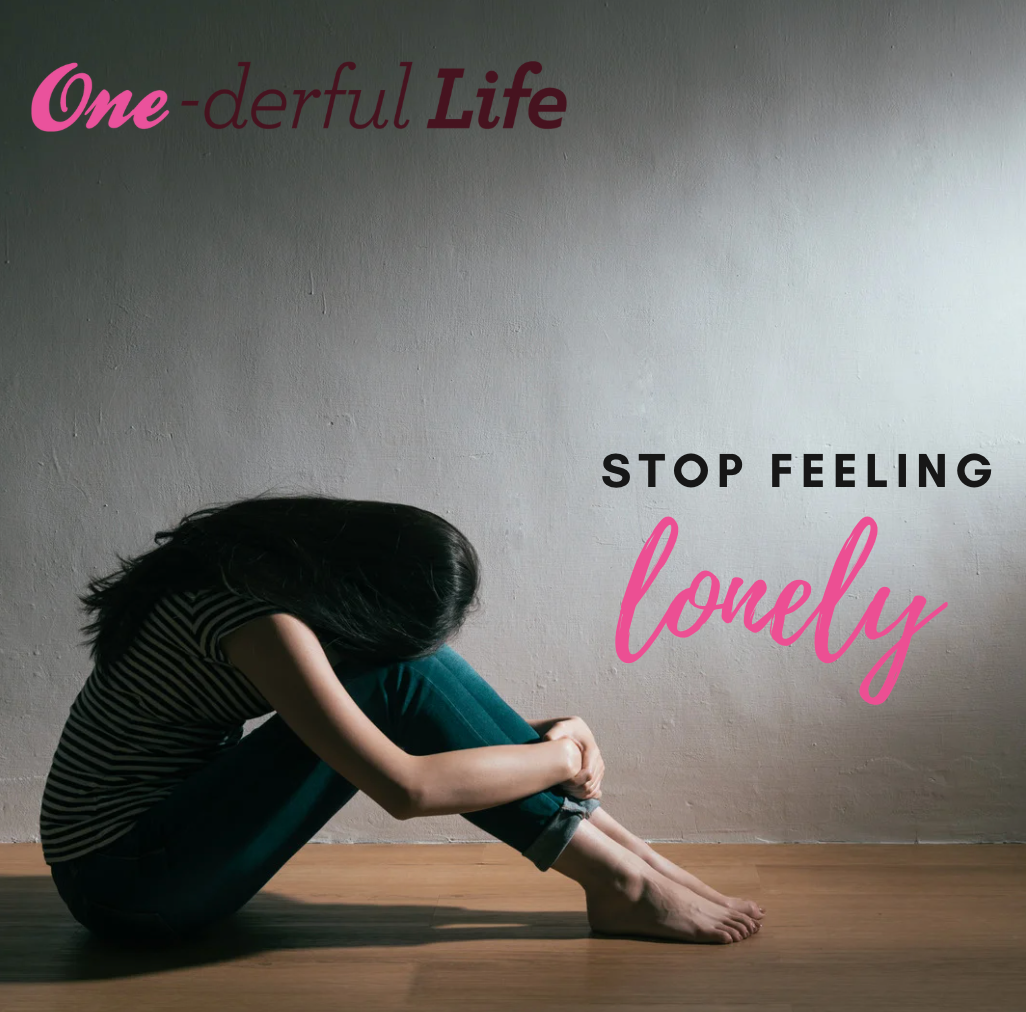
Sometimes loneliness can drain our motivation and make it difficult to stay engaged with our health, our homes, our relationships, and the routines that normally help us feel grounded. If that sounds familiar, my free Overcoming Loneliness training can help you begin rebuilding connection and creating a fuller life right where you are. You can watch it here:
https://marydittman.mykajabi.com/free%20loneliness%20training%20optin
Question: What is one small way you could show yourself more self-respect this week?
Stay connected with news and updates!
Join our mailing list to receive the latest news and updates from our team.
Don't worry, your information will not be shared.

Want the One-Derful Life blog in your inbox? How about some free stuff?
Recent Posts
Categories
All Categories